
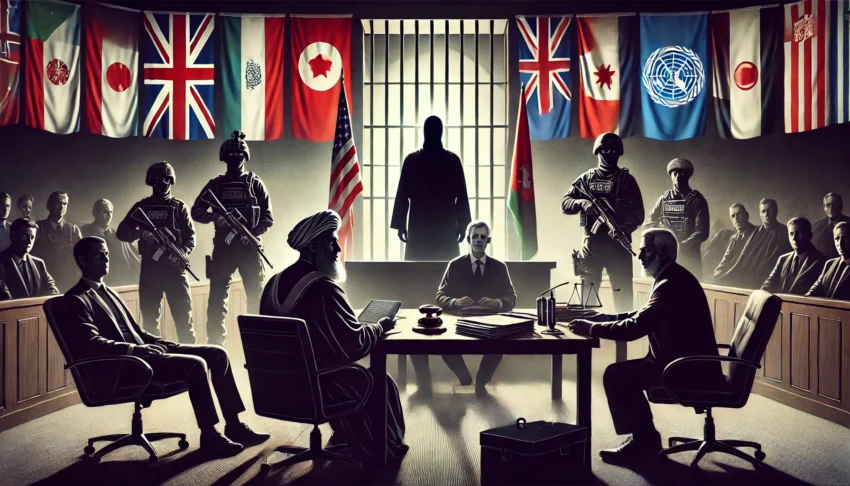
There is no valid justification for murdering political enemies. Violence against political adversaries undermines the fundamental principles of democracy and the rule of law. It is a blatant disregard for human life and sets a dangerous precedent that perpetuates cycles of retaliation and instability. We understand this principle when considering individual actions, such as Thomas Crooks’s attempted murder, which no one defends. So why do we lower our standards for entire governments like Israel?
Statements Condemning Political Assassinations
Terrorism is defined as “the unlawful use of violence and intimidation, especially against civilians, in the pursuit of political aims.” This definition encapsulates actions intended to create fear and coerce governments or societies in furtherance of political, ideological, or religious objectives.
President Joe Biden has articulated the immorality of such actions clearly: “The rule of law is not optional, and the taking of a life outside of judicial process is never justified. Democracy thrives on debate, not on violence.”
Similarly, prominent Republican leaders have echoed this sentiment. For instance, Senator Mitt Romney stated, “Resorting to murder to silence political opposition is a reprehensible and cowardly act that stands against everything we believe in as a nation.”
Israel’s Actions: A Critical Examination
Recently, the assassinations of Ismail Haniyeh and Fu’ad Shukr by Israeli forces have raised serious ethical and legal questions. Ismail Haniyeh, the political leader of Hamas, and Fu’ad Shukr, a senior military commander, were both killed under the justification of combating terrorism. However, when analyzed through the lens of terrorism, these actions bear striking similarities to the very acts they purport to combat. Critics argue that Israel’s justification for targeted killings mirrors the rhetoric used by terrorists, essentially saying, “It’s us or them.”
Legal Alternatives to Extrajudicial Killings
There are lawful ways of apprehending and holding individuals accountable. International law provides mechanisms for prosecuting terrorists through established legal frameworks that ensure justice while upholding human rights. The International Criminal Court (ICC) and various international tribunals have successfully prosecuted individuals responsible for terrorism and other serious crimes.
Israel, with its advanced intelligence and military capabilities, possesses the means to capture and prosecute suspected terrorists. Utilizing these legal avenues would not only adhere to international norms but also strengthen Israel’s moral standing and its commitment to the rule of law.
Israel’s justification for these killings hinges on the argument of national security and self-defense. However, by extrajudicially killing political figures, Israel engages in acts that fit the definition of terrorism—using violence for political ends. This approach not only violates international law but also perpetuates a cycle of violence and retribution, undermining any long-term prospects for peace.
The Path Forward
The international community must hold all nations accountable to the same standards of justice and human rights. Selective morality undermines global stability and the integrity of international law. True progress in the Middle East, and indeed globally, can only be achieved through dialogue, adherence to the rule of law, and a steadfast commitment to human dignity.
Conclusion
Political assassinations, regardless of the perpetrator or the euphemisms used, are indefensible. They erode the foundations of democracy, perpetuate violence, and often result in greater instability. Leaders worldwide, including President Joe Biden and Senator Mitt Romney, have condemned such actions. There are legitimate and effective ways to hold individuals accountable for terrorism. It is imperative that all nations, including Israel, utilize these legal frameworks to ensure justice and a more stable, peaceful world.